

Round 2 · KladnoDivision 1
Analysis
Playoff adjustments, midfield pressure and a title race reset: What Round 2 revealed about the 1st Division
Read the full article →
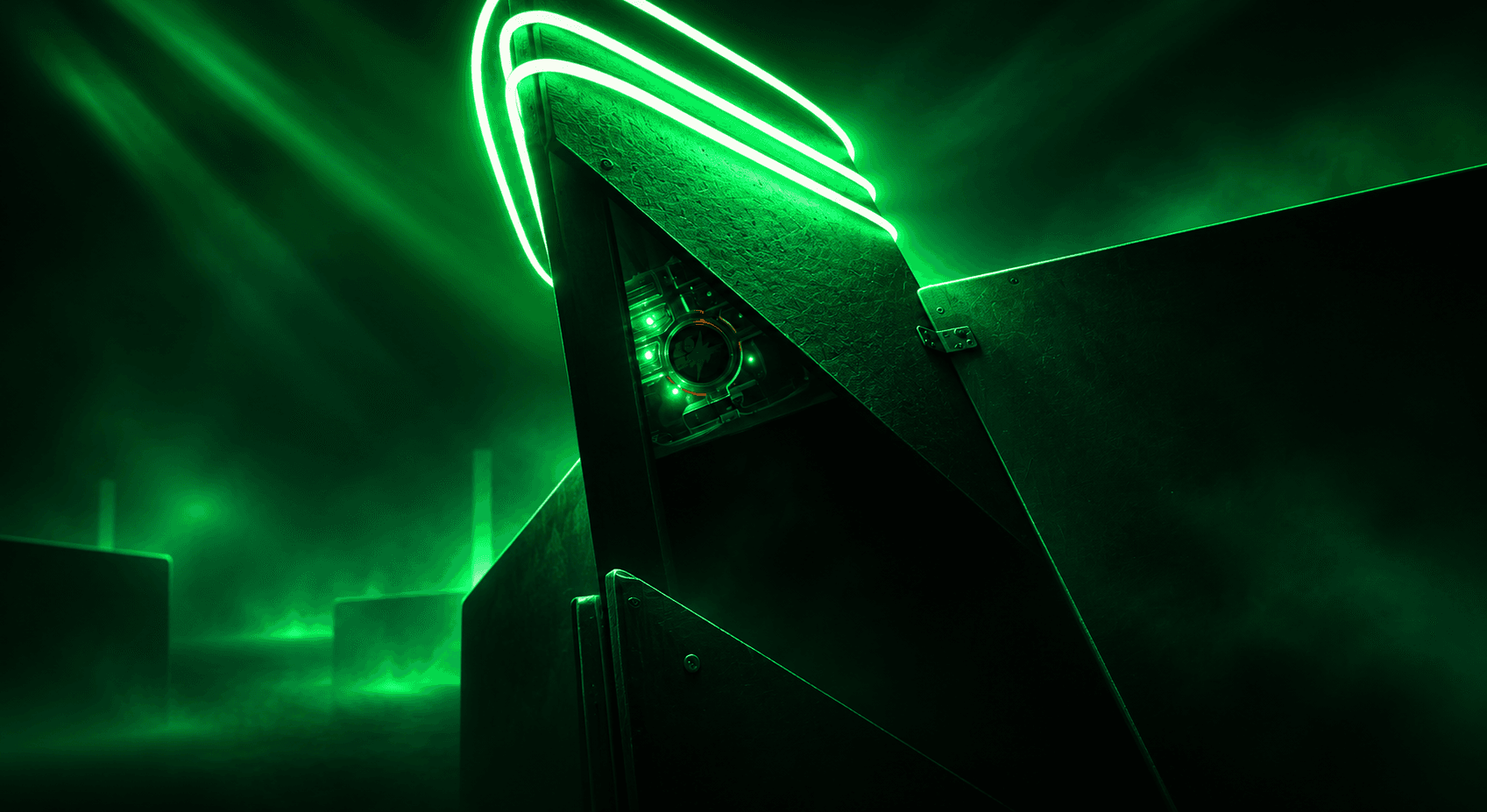
After an opening weekend dominated by the home teams in Říčany, the Czech Laserball League moves to Aurora Lasergame Kladno on 14–15 November. With a radically different arena layout, a change in home advantage and valuable championship positions at stake, Round 2 could produce a very different competitive order.
The opening round of the Czech Laserball League could hardly have gone better for the teams based in Říčany. Bagrýk 34 swept Saturday's 2nd Division tournament with ten victories from ten matches, while Tutli completed Sunday's 1st Division competition with nine wins and a draw. Both teams took gold on familiar ground, establishing themselves as the early leaders of their respective divisions.
A month later, the competition moves to Aurora Lasergame Kladno, where the conditions will be very different. The second round, scheduled for 14–15 November, represents the first major test of the league's multi-arena format and offers an opportunity for the four home teams of LC LEGION Kladno to reverse their fortunes. After claiming just one medal between them in Říčany, they will now compete in an environment they know better than anyone else.
The change of venue will affect much more than familiarity. Říčany's spacious layout rewarded patience, positional control and the ability to exploit concealed routes through the arena. Kladno presents a narrower, more direct playing field where defenders can cover multiple lanes more easily and attackers have considerably less time to react. Teams that successfully controlled the pace in Round 1 may find themselves under greater pressure, while those accustomed to faster, more reactive play could have an opportunity to move up the standings.
The three arenas of the Czech Laserball League have deliberately different characteristics, requiring teams to adapt their tactics throughout the season. The opening round in Říčany demonstrated how valuable detailed knowledge of an arena can be, particularly when controlling possession and protecting defensive positions. Its expansive layout, numerous obstacles and partially concealed routes allowed experienced players to retain the ball for extended periods, often forcing opponents to abandon their established formations in search of possession.
Kladno changes that equation. Its elongated layout and angled obstacles create longer sightlines and fewer isolated positions where a player can remain unnoticed. The reduced width also means that a coordinated team can cover a greater proportion of the arena without committing as many players to individual lanes. Possession will still be important, but retaining the ball is likely to require more active movement, quicker passing and better support from teammates.
That could be particularly significant for teams such as Kočičí démoni, whose patient approach in Říčany relied heavily on Karol's ability to control possession, or Bagrýk 34, whose attacking game was often coordinated by Mrejk holding the ball in midfield. Both systems were effective during the opening tournament, but Kladno's more direct sightlines could make those positions easier for opponents to challenge.
The same applies to defensive organization. In Říčany, several less experienced teams struggled to divide six players between protecting their target and covering a wide midfield. At Kladno, the more compact arrangement could make coordinated defensive pressure easier to maintain, although a poorly timed movement or misplaced clear may also be punished more quickly.
Ultimately, the venue change is unlikely to favor speed alone. Teams will need to react faster, but also choose their moments carefully. Well-timed coordinated attacks, accurate defensive clears and the ability to exploit brief openings could become decisive throughout the weekend.
Few teams enter the second round with more to prove than Bagrýk 34, despite their dominant opening performance. The Říčany lineup was virtually untouchable at home, winning all ten matches with an extraordinary 85:16 goal record. Mejval and Mrazík repeatedly overwhelmed defenses through explosive attacking runs, while Mrejk controlled possession and created opportunities from midfield.
Kladno will provide a different test of that combination. The team's attacking speed should remain an asset, but opponents will have fewer lanes to monitor and potentially more opportunities to intercept passes before they reach the target. Mrejk may also find it harder to retain possession in the positions that allowed Bagrýk to dictate so much of the opening tournament. Their ability to adapt quickly will be one of Saturday's most interesting storylines.
The biggest change in circumstances, however, belongs to Aurora Legion Purple and Yellow. The two young Kladno teams endured a difficult opening round, finishing eighth and ninth respectively, but their performances were affected by the unfamiliar conditions in Říčany. Both struggled at times to locate opposition ball-carriers and maintain defensive coverage across the wider arena, while several of their attacking strengths were difficult to exploit against opponents with better knowledge of the layout.
Returning to Kladno could make a substantial difference. Purple's Skotík 39 and WeterosCZ, along with Yellow's Vixtrax, Lonklo and their teammates, are accustomed to the arena's shooting angles, movement routes and defensive positions. Their familiarity should allow them to concentrate more on executing their own game rather than constantly adjusting to unfamiliar surroundings. That does not automatically make either team a playoff contender, but it gives both a realistic opportunity to improve significantly on their Round 1 results.
Yellow's upcoming meetings with Kobry a Užovky will be particularly interesting. Kobry finished second in Říčany, where Šmoula's height and the team's positional knowledge proved valuable around the Green side's half-height obstacles. Kladno removes some of those specific advantages, while giving Yellow a chance to compete on familiar ground. The two sides also have a history of encounters in Kladno's OPEN Series, making this an intriguing test of how much home conditions influence their relative performance.
SK Domažlice could also benefit from the change of venue. Despite finishing fifth in Round 1, their fast attacking partnership of Killer Elmo and Botwea troubled several leading teams, including Bagrýk 34. Their ability to complete rapid transitions and attack before opponents can reorganize should remain valuable in Kladno, where quick reactions are central to the playing style. With previous experience in the arena, Domažlice have reason to believe they can turn their narrow opening-round defeats into a stronger result.
Fourth-placed Chaos Protocol will be another team worth watching. The Prague squad demonstrated effective attacking transitions and a willingness to adjust its defensive approach in Říčany, qualities that should help when adapting to a different arena. Kočičí démoni, meanwhile, face the challenge of maintaining their patient possession game under more immediate pressure, while Kobry a Užovky will need to replace some of their home-arena advantages with coordinated passing and movement.
For Flying UHU and Fénixové, consistency remains the priority. Both demonstrated the ability to compete in individual matches during Round 1 but struggled to maintain that level throughout the tournament. With the standings still close enough for significant movement, Saturday offers another opportunity to enter the promotion conversation.
The central question remains whether anyone can stop Bagrýk 34. Their perfect opening tournament established them as the division's benchmark, but a convincing performance in Kladno would demonstrate that their strength extends well beyond the familiar conditions of Říčany.
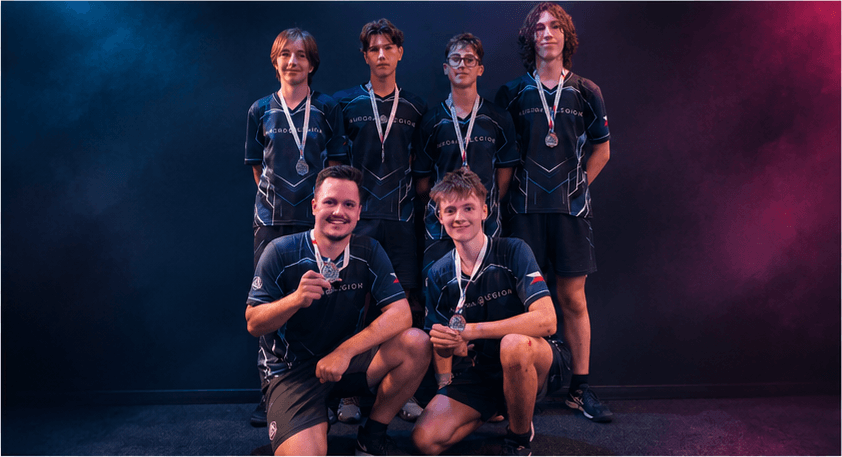
The 1st Division has an equally compelling storyline. Tutli arrive in Kladno as unbeaten Round 1 winners, but Aurora Legion Black will have an opportunity to challenge them on familiar territory after claiming silver in Říčany.
Legion Black's attacking identity has developed around the reactive style of their home arena. Hunter, Tobi, Barbeque and captain Fíla are particularly effective at rapid transitions, coordinated attacks and exploiting the brief moments when opposing defenders lose track of multiple threats. Their familiarity with Kladno's angled obstacles could give them an important advantage against teams more accustomed to creating opportunities through wider movement and prolonged possession.
Their performance in Říčany already demonstrated that they can compete with the strongest opposition away from home. Legion Black pushed Tutli to a narrow 5–4 result in the group stage and later overturned a deficit against Lamčany to reach the final. Although Tutli eventually proved too strong in the championship match, the result left Kladno's leading team in second place overall and firmly in contention for the Winter Split.
Tutli, however, should not be underestimated simply because they are leaving home. Their success was based on much more than arena-specific attacking positions. Gauc_cz provided an exceptionally reliable defensive foundation, while Mihálec, Dapar and Kryštof repeatedly dominated midfield possession and limited opposing attacks. Ziki and Almatirka2 were then able to convert the opportunities created.
The narrower layout in Kladno could even benefit certain aspects of that approach. A well-organized midfield press can potentially cover the entire width more effectively, giving opponents less room to escape. The more significant challenge for Tutli may be maintaining their defensive stability against faster, more direct attacks and adapting the scoring positions that proved so effective in Říčany.
Aurora Legion Blue will also be hoping for a home revival. Their seventh-place finish was disappointing, although the team demonstrated considerable attacking potential in individual matches. Tonda, David and Brejňa were effective when able to coordinate their movements, while Barefoot, Elda and Lucario contributed to several promising sequences. In Kladno, where their knowledge of the defensive angles and target approaches should be much stronger, Blue have a genuine opportunity to improve their results and challenge the teams immediately above them.
Among the visitors, Lamčany and Enforcers should be particularly well prepared. Both teams include experienced players familiar with Kladno from previous competitions, meaning the arena will be far from unknown territory. Lamčany finished third in Říčany after narrowly losing their semifinal to Legion Black, and the attacking qualities of Ladva and Beegel could translate effectively to Kladno's faster exchanges. Enforcers, meanwhile, missed the playoffs despite holding Tutli to a draw and will be looking to turn their defensive strength into a more consistent set of results.
Flying Eagles also remain dangerous. Their fifth-place finish came despite a positive goal difference and several competitive performances against leading teams. With previous experience in Kladno and a passing game capable of moving the ball quickly through multiple players, the German side could challenge for a semifinal berth.
For fourth-placed ŠtramáciČB, the challenge will be maintaining the resilience that carried them through a series of close matches in Říčany while adapting to a venue that may offer fewer opportunities to slow possession. Flying Tymozzo will be looking for greater defensive consistency, while Laser game Plzeň hope that their direct attacking combinations, particularly those involving Dubs, CamyDub and Pacalis, will be more effective in Kladno's narrower lanes.
The depth of experience across the division makes Sunday's outcome difficult to predict. Legion Black may be among the leading favorites on home ground, but Tutli remain unbeaten, Lamčany have already demonstrated their quality against Kladno's strongest team, and several others have the ability to disrupt the expected order.
Round 2 arrives at an important point in the Winter Split. With one tournament completed and the final round in Domažlice scheduled for 12–13 December, the standings are beginning to take shape. The final placement at each event, including the playoffs, contributes to the overall competition, making every position important for the split rankings and the approaching promotion and relegation battles.
The opening weekend established Bagrýk 34 and Tutli as the teams to beat, but it also highlighted the influence of arena familiarity. Both champions enjoyed home advantage in Říčany, while several visiting teams struggled to translate their established playing styles to unfamiliar conditions.
Kladno now offers an opportunity to reverse that pattern. The Legion teams will compete in familiar surroundings, the leaders will face their first away test, and the remaining contenders will have a chance to demonstrate how quickly they can adapt.
Whether that produces a major reshuffling of the standings or another demonstration of strength from the Round 1 winners remains to be seen. Either outcome will tell us considerably more about the teams than the opening weekend alone.
Round 1 showed who could win in Říčany.
Round 2 will show who can win away from home.
Analysis
Report

Analysis